Have you recently purchased an ADDIPURE BHO extractor and can’t wait to try it for the first time? If this is your first BHO / DHO extraction, remember that no one is born an expert and it is best to learn the basics first. Otherwise, your extracts may be of poor quality or even worse, you may injure yourself by handling the extractor improperly. To avoid this, please pay attention to the following guide, where we will explain in detail how to work with ADDIPURE BHO extractors.
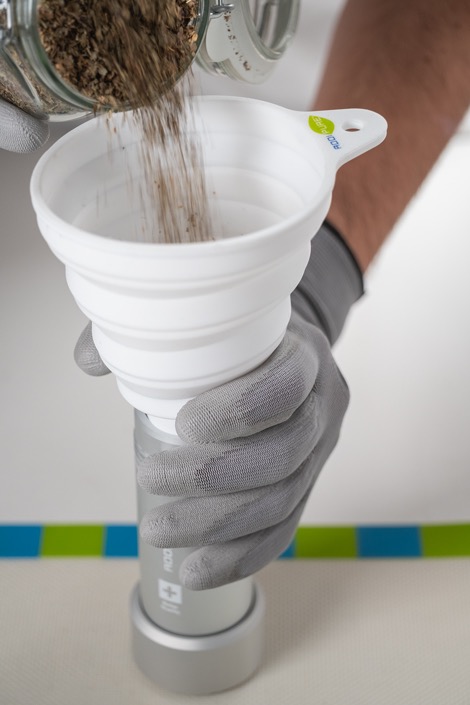 ADDIPURE – Innovation meets design. With its flexible modular design, elegant look, high-quality materials, ease of maintenance and outstanding durability, the ADDIPURE range is setting new standards in plant extraction. You can find our ADDIPURE BHO extractors here. The BHO and DHO extractors are made from aluminum with a food-grade anodized finish. ADDIPURE extractors are designed for extracting essential oils and other compounds from plants using pressurized butane or dimethyl ether (DME). The ADDIPURE extractors are “open blast”, which means they are based on a simple mechanism. The cylindrical extraction tube is filled with plant material and securely closed on both ends with the extraction head gasket and filter unit. Pressurized gas from a can is then injected into the filled extractor (extraction head gasket), flows through the plant material, and exits on the other side (filter unit) into a collection container enriched with extracted compounds. Finally, the solvent evaporates easily because both butane and DME are gaseous at normal atmospheric pressure and room temperature.
The resulting extracts are called BHO (Butane Hash Oil) if butane was used as solvent, or DHO (Dimethyl Ether Hash Oil) if the extraction was performed with dimethyl ether. These names commonly refer to cannabis, but it is far from the only plant that can be processed using the ADDIPURE system. Other suitable plants include herbs such as rosemary, thyme, mint, and oregano, as well as aromatic plants and spices like lavender, ginger, turmeric, clove, and cardamom. Valuable essential oils can be obtained from all these plants listed above and then used with aromatherapy or homemade remedies that suits your needs.
Visit this link for additional information on extractions: What plants can be extracted with butane and DME
How do I know which solvent to use?
Although the extraction process with butane and DME is essentially the same, there are differences between the two solvents. Butane is a strong non-polar solvent and extracts minimal chlorophyll from plant material, even under non-ideal conditions. DME is also primarily non-polar, but it can interact with polar molecules such as chlorophyll. This can be minimized by lowering the extraction temperature and using well-dried and properly ground plant material. We have covered the differences between butane and DME in detail with this previous pureTalk article.
 When to choose ADDIPURE n-Butane |  When to choose ADDIPURE Dimethyl Ether (DME) |
| You are extracting from fresh (fresh-frozen) plant material | You are extracting from well-dried plant material |
| You are working with trim or finely ground plant material | You are working with high quality flowers (small) |
| You do not have the option to pre-chill your equipment and cans in a freezer | You can place your equipment and can in a freezer |
| You can remove solvent from the extract | You don't have a vacuum chamber |
| Little experience | Experienced extractor |
ADDIPURE BHO DHO extraction explained step by step
Below is a basic guide for working with BHO ADDIPURE extractors and solvents. Additional safety information and answers to frequently asked questions can be found here.
Step 1. Safety
 When using pressurized gas for plant extraction, safety always comes first. Both butane and dimethyl ether are volatile gases, odorless and their vapors are extremely flammable. Always perform extraction outdoors, far from sources of fire or hot objects. Do not expose the extractor or solvent canister to direct sunlight. Do not smoke, do not use electronic devices, and be aware of static discharge.
Only use solvents intended for botanical extraction and suitable for food-grade use. Lighter gas (industrial gas) or technical-grade gas contains mercaptan, benzene and other toxic impurities (Mystery Oils) that can permanently damage your health. ADDIPURE solvents are completely free of harmful impurities, approved for food use, and are regularly tested for purity by an independent Swiss laboratory.
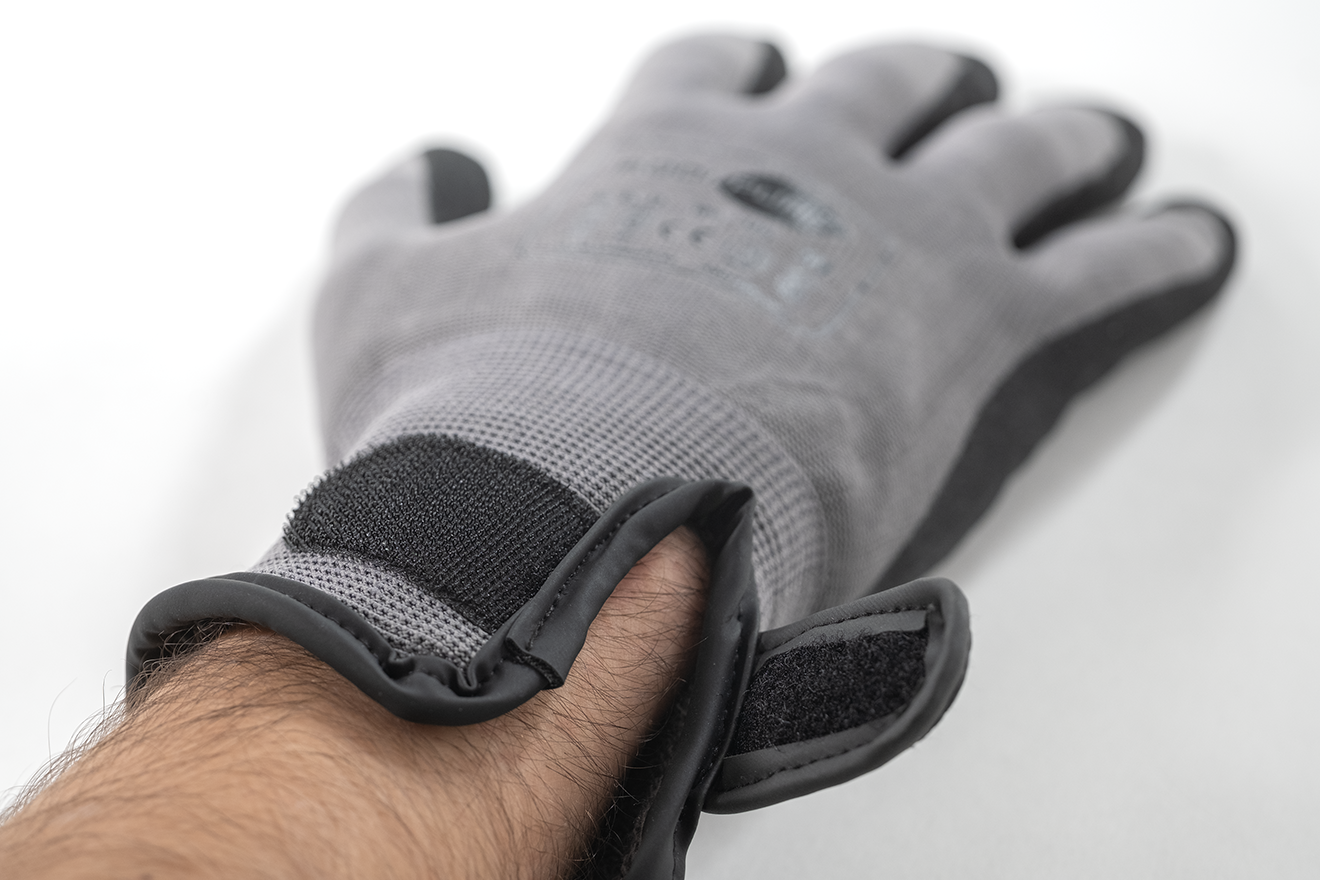
Always use protective equipment in accordance with EN 1149-5 such as gloves, goggles, and clothing that covers your skin. Evaporating gas cools the extractor tube so much that touching it with bare hands may cause frostbite. It is also important to protect your eyes from liquid spraying from the extractor.
Step 2. Preparing the plant material
 Depending on what you are extracting, you can use flowers, leaves, stems, bark, or roots. In the case of cannabis, the best results are achieved with flowers, which contain a higher proportion of cannabinoids and terpenes than leaves or stems. If you want to extract from fresh plants such as fresh-frozen material, it is better to use butane, which binds fewer plant pigments than DME.
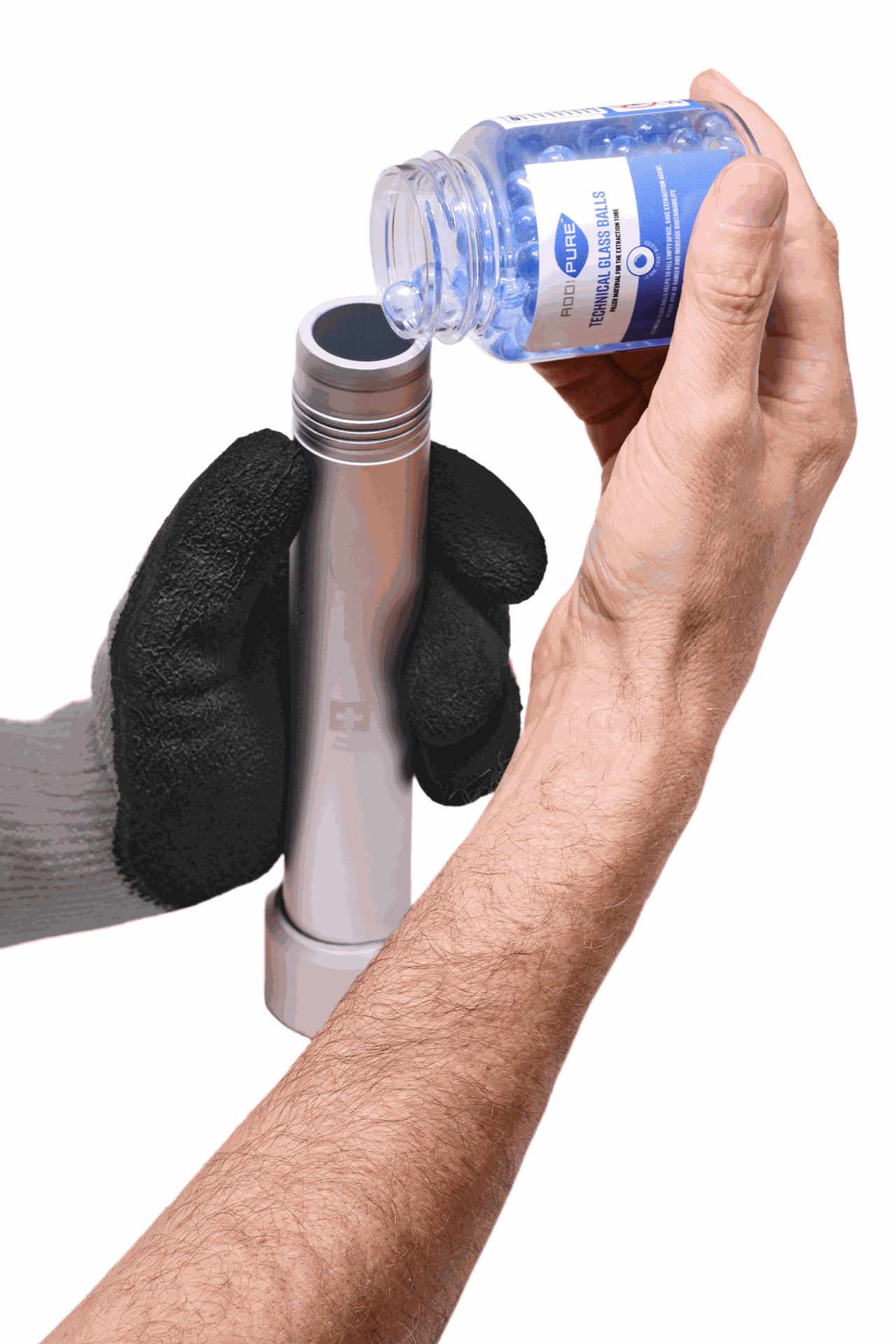
Before extraction, cut or grind the plant material into even sized pieces approximately 3-5 mm in size. This is not recommended for DHO extraction. Where possible, use whole flowers, broken up by hand into smaller pieces of 3–5 mm. Then, fill the extractor tube with evenly packed material and place it in the freezer for up to 24 hours. For efficient and clean extractions, the solvent must flow evenly. It is advisable to fill the top 1–2 cm with ADDIPURE technical glass beads if there is not enough plant material to fill the extractor fully. This saves on extraction solvent and reduces the environmental impact by lowering VOC (volatile organic compounds) emissions by ensuring the pressure in the tube is acceptable, so no gas goes to waste.
Step 3. Assembling the extractor and preparing equipment
Your ADDIPURE extractor arrives assembled, but for clarity, let’s briefly explain the correct setup. Both ends of the extraction tube are fitted with screw caps. The extraction head gasket has a small opening (hole) for inserting the gas cartridge nozzle. The bottom (filter unit) has a larger opening (hole) and contains the ADDIPURE filtration system consisting of three layers. At the bottom is the fine-mesh (50µm) DXQ stainless steel filter, above is the white ADQ extraction filter, and on top the coarse-mesh (400µm) AIQ stainless steel filter. The stainless-steel screens should be cleaned after each use, preferably with ADDIPURE 2in1 Cleaner Disinfectant, while the white ADQ extraction filter should be replaced after 5–7 extractions. If you have a model with a height-adjustable unit, fit it in front of the filter unit when viewed from above. The materials required for installation are supplied with the height-adjustable unit.
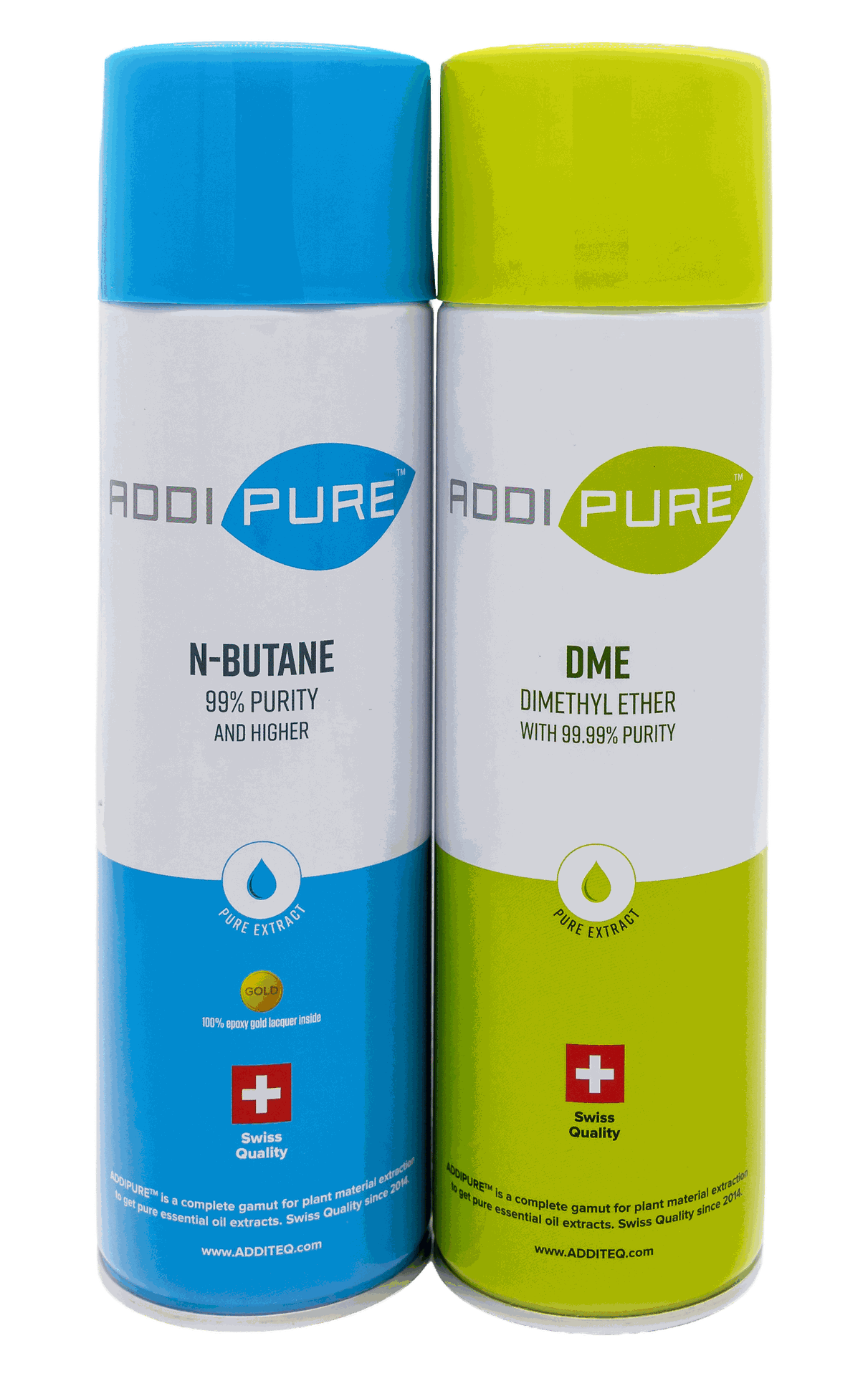 For the cleanest results, always work with chilled gas. ADDIPURE Dimethyl Ether (DME) works best when cooled to at least -25 °C and can be left in the freezer overnight. For ADDIPURE n-Butane, the optimal temperature is around 2 °C to maintain sufficient pressure, so a few hours in a cool place is sufficient before use.
The final essential tool is a collection container to catch the liquid that flows from the extractor. Suitable containers are made of heat-resistant glass or other materials resistant to heat and chemicals. After the solvent evaporates, the extract has a sticky, resin-like consistency and can be difficult to handle. Line the container with non-stick ADDIPURE PTFE Foil so the finished extract can be easily removed without loss of product. Additionally, one can work with the pre-cut and pre-folded ADDIPURE Virgin PTFE Sheet for more immediate use. This ensures consistent performance during extraction. Thanks to the high-quality materials used, ADDIPURE Virgin PTFE Sheet is durable and, like all ADDIPURE PTFE sheets, can be reused multiple times.
Step 4. Extraction process
Once your plant material is prepared and chilled, the extractor is assembled, and the gas can is cooled, you can begin with your BHO or DHO extraction. Always perform the process outdoors on a stable non-conductive surface, with the extractor positioned vertically and the collection container directly below the outlet. Before starting, check that all parts are securely tightened and put on protective thermal gloves for BHO extraction.
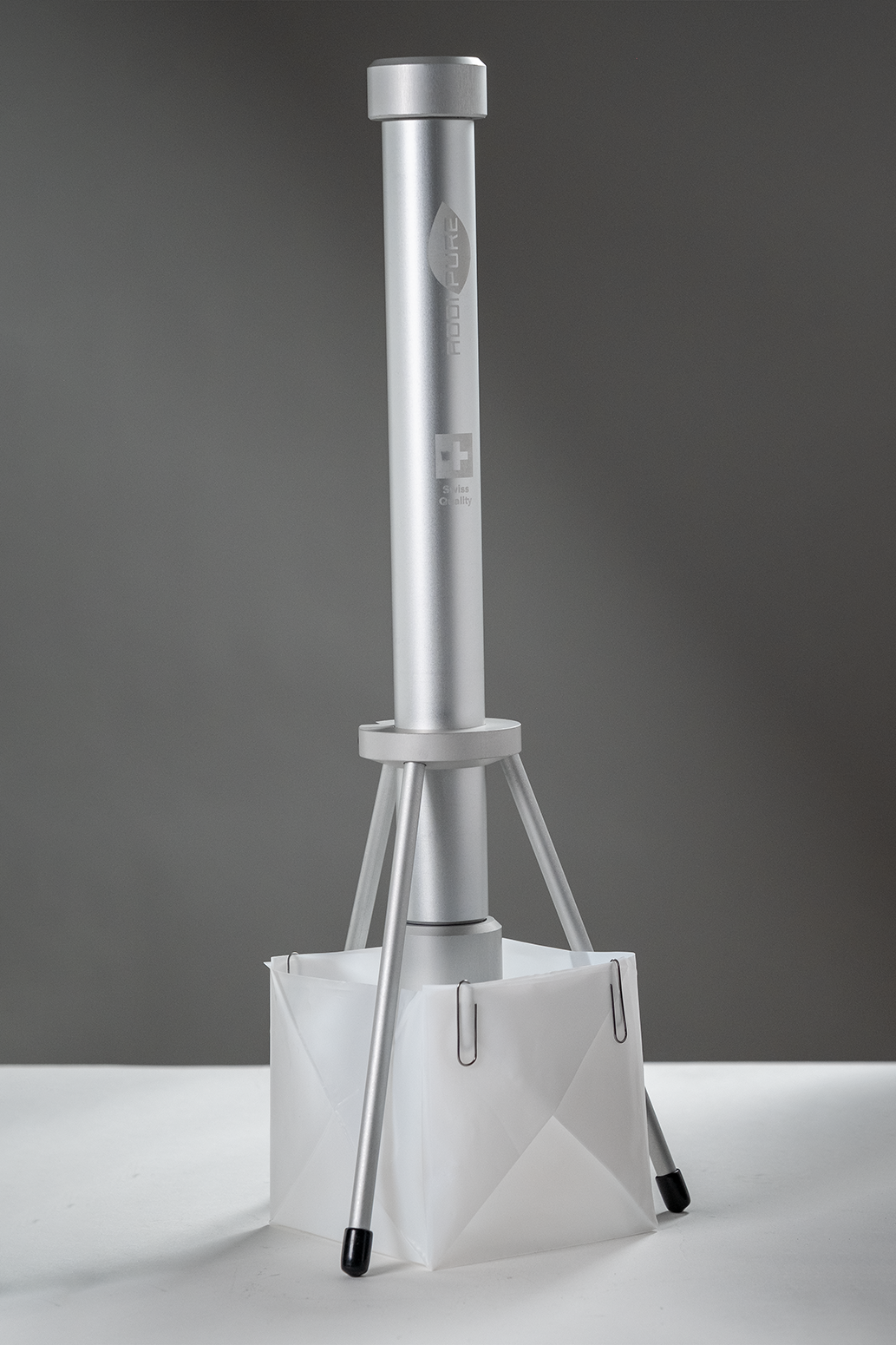 Insert the cartridge nozzle into the opening at the top of the extractor (extraction head gasket) and press gently. Maintain constant pressure and release the gas continuously throughout the extraction. Depending on the size of the ADDIPURE BHO extractor and the amount of plant material, you will need one or more cans (see table 1 below). Observe the liquid flowing from the extractor. At first, it will be very clear, then it will gradually turn yellow-green as lipophilic compounds dissolve. When clear liquid starts to come out again, the first stage of extraction is complete. Cover the small opening of the extraction head for a few minutes to maintain pressure and encourage solvent flow through the filter unit.
The extraction liquid in the collection container will be extremely cold and will cause moisture to condense on the extract, which can affect its quality. You can prevent this by collecting the liquid in a box made from PTFE foil, as shown in the image. Keep the box closed until the solvent has evaporated. To accelerate solvent evaporation (while minimizing terpene loss), the container can be placed in a warm water bath at approximately 15 to 20 °C. Gently move the liquid back and forth. Eventually, the solvent evaporates, leaving behind a resinous, sticky extract.
Step 5. Extract purification
In the collection container you now have a mixture of solvent and extracted plant compounds, known as BHO/DHO oil. This is not yet the final product. The remaining solvent must be removed from the extract. Physics will take care of most of it. Both butane and DME are gases under normal conditions, so if you wait a few hours, most of it will evaporate. At first, you will see intense bubbling, and as the volume decreases, the liquid will thicken into golden oil.
When bubbling has largely ceased, you can move the extract indoors and proceed to the next stage of purification. Although the extract may appear clean, it still contains small amounts of solvent that must be removed. The best method for this is to use a vacuum chamber with heating mat underneath.
A clean extract can be identified by the fact that it does not foam (develop bubbles) at room temperature and no new bubbles form under vacuum. The consistency may be glass-like (shatter), softer (wax), or thick and syrupy (oil). High-quality extracts typically have a golden color without dark shades or impurities. We have discussed different types of extracts in detail in a previous pureTalk article.
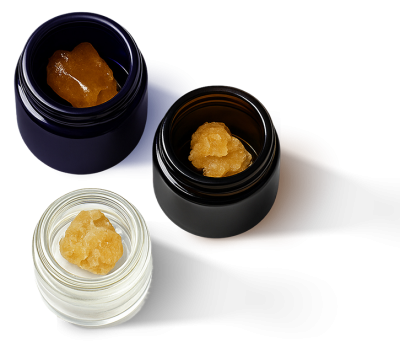 Make sure to store finished extracts in airtight containers made of UV glass or silicone in a cool, dark place. The ADDIPURE UV glass jars provide maximum light protection for extracts, essential oils and natural products. The airtight, leak-proof, and odor-neutral seal preserves freshness, aroma and active compounds. The ADDIPURE silicone jars are food-grade with non-stick coating for clean handling of sticky extracts, concentrates and essential oils. All ADDIPURE storage articles feature a wide neck design that allows easy filling and removal of sticky, semi-liquid or dry materials.
Mastering your first extraction may seem like a challenge, but with ADDIPURE equipment and this guide, you have everything you need to succeed. We wish you great results!
For more guides, tips, and insights from the world of extraction, follow the ADDIPURE pureTalk blog.

 and then Add to Home Screen.