Most people consider lighter concentrates to be higher quality than dark brown or green extracts. But does a darker color really mean lower quality? Not necessarily. Pigments in extracts are not always a bad thing, and if they are undesirable, they can often be removed from the final product. How this works, and much more, is explained in the following sections.
Color is often the first thing we evaluate when looking at cannabis extracts. Light or golden extracts are perceived to be a higher and purer quality, while dark green or brown concentrates are commonly considered low quality. The color of an extract does not always correlate with its purity or overall quality. To understand why different plant extracts have different colors, we need to look at plant pigments and how they interact with different types of extraction solvents.
You may also be interested in: The Complete Guide to Solvent-Based Cannabis Extracts
Which Pigments Affect the Color of Cannabis Extracts?
Pigments are colored compounds that plants produce for various reasons. They enable photosynthesis, protect the plant, and provide color to leaves, flowers, and fruits. Most plant pigments can be classified (1) into main groups:
- Chlorophylls (green): Natural pigments found in chloroplasts that are essential for photosynthesis. Chlorophyll easily breaks down when exposed to heat, light, oxygen, acids, bases, or metal ions. During degradation, the bright green color turns into an olive-brown shade.
- Anthocyanins (red, purple, blue): Natural pigments from the flavonoid group that give plants their characteristic purple-blue coloration. Their color depends on pH and they degrade easily when exposed to heat, oxygen, and metal ions. They are typical for flowers and berries, but anthocyanins are also present in cannabis in smaller amounts.
- Carotenoids (yellow, orange, red): These pigments are produced by plants for photosynthesis and protection. They dissolve easily in fats and non-polar solvents and are relatively stable even under mild heating. However, they degrade and fade when exposed to light and air. In cannabis, carotenoids are found in leaves, flowers, and seeds.
In addition to these main pigments, plants also contain phenolic acids, tannins, and flavonoids. These compounds are initially only lightly colored, but over time they oxidize and polymerize into brown substances that are responsible for the color of tea, coffee, and wine.
How Extraction Solvents Affect the Color of Cannabis Extracts
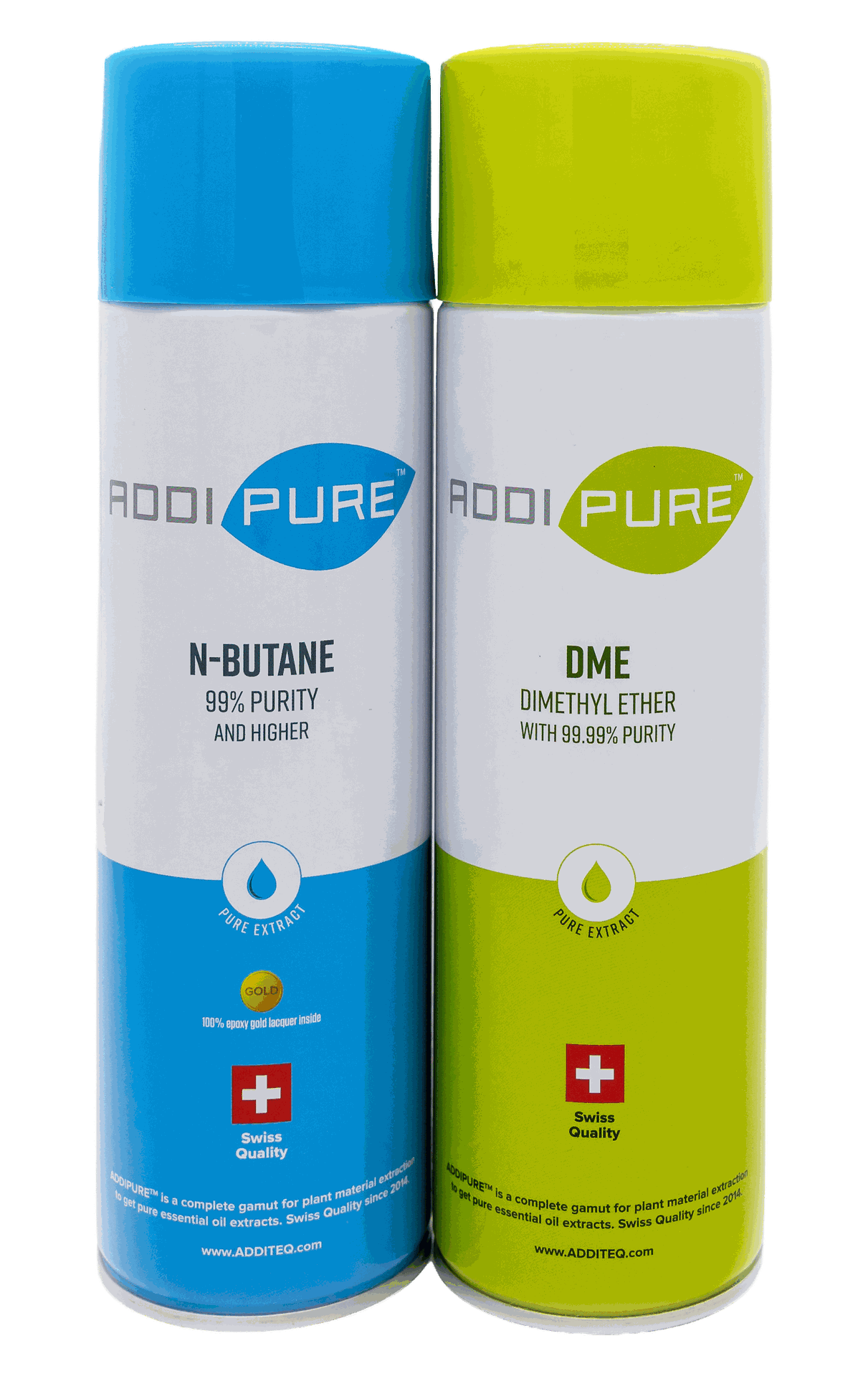 The solvent used during extraction is one of the most important factors influencing the color and composition of cannabis concentrates. In general, solvents with higher polarity extract a broader spectrum of plant compounds, including pigments and phenolic substances that contribute to darker coloration. However, solvent polarity is not simply “polar” or “non-polar.” Most extraction solvents exist on a spectrum. For example, ethanol contains “polar” and “non-polar”:
A polar hydroxyl group.
And a small non-polar hydrocarbon chain.
This dual nature allows ethanol to dissolve both water-soluble compounds and non-polar compounds such as cannabinoids and terpenes. As a result, ethanol is highly effective at extracting cannabinoids, but it also pulls significant amounts of chlorophyll, flavonoids, sugars, and other plant compounds.
By comparison, non-polar solvents such as n-butane extract cannabinoids and terpenes more selectively while dissolving fewer polar compounds and pigments, which often results in lighter-colored concentrates.
Dimethyl ether (DME) occupies an interesting middle ground. Because DME is partially polar, it can dissolve a broader range of compounds than butane while still maintaining excellent cannabinoid solubility. This wider extraction spectrum is one reason DME often delivers higher cannabinoid yields and fuller-spectrum extracts.
You may also be interested in: Polar vs. Non-Polar Solvents – What’s the Difference?
BHO (Butane Hash Oil) typically has a light golden to almost transparent color, provided the extraction was carried out at sufficiently low temperatures. Longer extraction times, old plant material, or higher temperatures can lead to a higher content of chlorophyll and oxidized polyphenols, resulting in a darker color.
DHO (Dimethyl Ether Hash Oil) extracts usually display richer yellow or yellow-green coloration compared to BHO. This is because dimethyl ether is partially polar and extracts a wider range of plant compounds, including additional terpenes, phenolics, and certain pigments. Importantly, darker or greener coloration is not an unavoidable characteristic of DME extraction itself. When dimethyl ether is used correctly (optimized temperature control, fresh material, professional filtration, controlled extraction parameters) exceptionally clear and light-colored extracts can also be achieved. Rather than being viewed as a disadvantage, DME’s broader solvency profile can be understood as a major advantage. DME enables fuller-spectrum extraction while maintaining excellent cannabinoid recovery efficiency. This makes dimethyl ether an attractive alternative for users seeking a broader compound preservation, higher extraction efficiency, reduced solvent consumption and more environmentally responsible extraction processes. The final appearance of DHO concentrates depends heavily on process control, filtration quality, and post-processing methods.
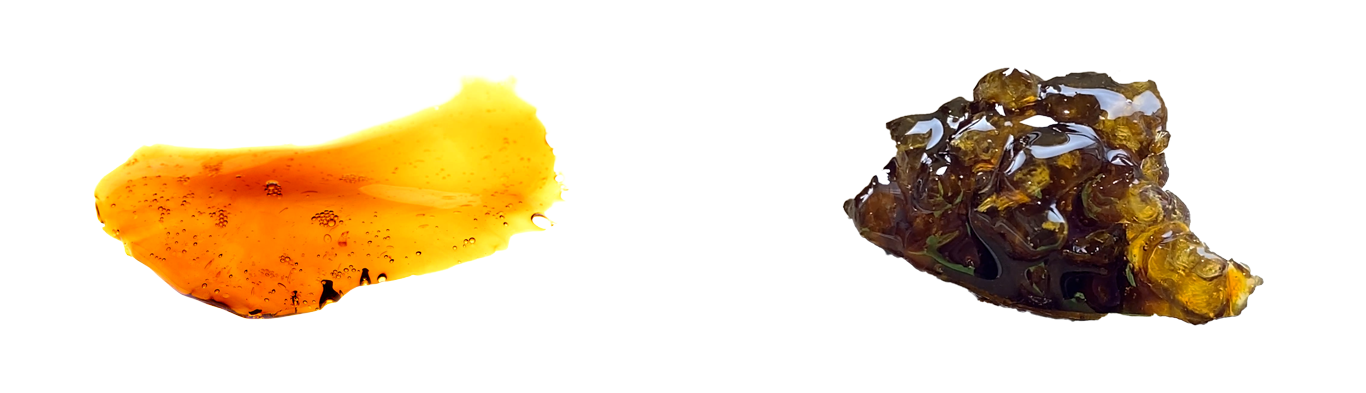 BHO and DHO extracts
You may also be interested in: DME Extraction Best Practices and Optimization Protocol
REMEMBER: Solvents used for extraction must be food-grade. Never use lighter fluid/gas or industrial solvents that contain toxic impurities (mystery oil). ADDIPURE extraction agents are tested and certified by an independent Swiss laboratory and meet the strictest safety and purity standards.
It is true that butane extraction can produce a more visually “appealing” extracts at first glance. On the other hand, under the same conditions, DME generally provides higher cannabinoid yields. The final color of a concentrate can also be modified through post-extraction processing.
Lighter and higher-quality cannabis extracts can be obtained through professional filtration and winterization. During winterization, DHO or BHO oil is mixed with alcohol and rapidly cooled so that fats and waxes solidify and can be removed. In contrast, unfiltered DME extracts tend to darken when stored in light, because chlorophyll oxidizes. Cannabis extracts also degrade faster at higher temperatures and when exposed to air. To counteract this, ADDIPURE offers food-safe, airtight and leak-proof storage containers in various sizes, made from silicone and UV-resistant glass.
Highest Purity with the ADDIPURE 3-Layer BHO Filtration System
Beyond solvent choice and temperature, filtration strongly affects color and clarity. Many of the pigments and browned phenolics that darken concentrates are bound to micro‑particles of plant tissue. Removing these particles yields visually cleaner extracts, even when cannabinoid content is the same.
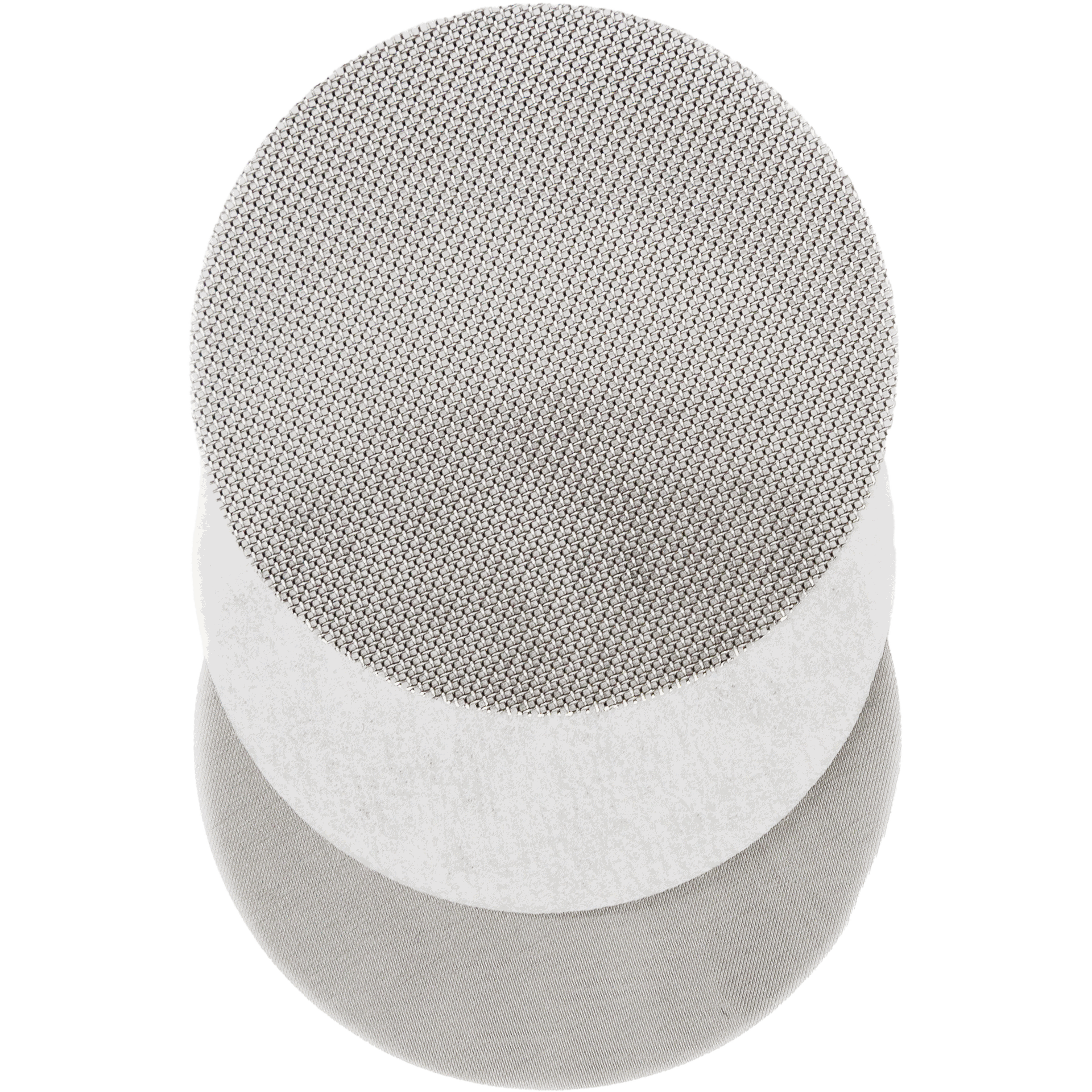 At the top, the AIQ coarse‑mesh stainless steel filter (400 µm) supports the weight of the dried plant material and performs the first filtration step, retaining larger fragments of leaves, flowers, herbs, twigs, plant matter and harvest residues. By taking the mechanical load, it prevents deformation and overloading of the finer filters below.
- In the middle, the patented white ADQ extraction filter provides high‑purity depth filtration, trapping fine plant particles and residues that would otherwise remain suspended in the oil and contribute to green or brown hues and later darkening during storage. This second filtration layer is key to exceptionally clean extracts. The white ADQ extraction filter should be replaced after about 5–7 extractions to maintain maximum performance.
- At the bottom, the DXQ fine‑mesh stainless steel filter (50 µm) forms the third filtration layer, protecting the white ADQ filter and polishing the extract one more time before the extract leaves the ADDIPURE extractor. The AIQ and DXQ stainless steel filters can be cleaned, disinfected and reused multiple times.
Working together, the AIQ–ADQ–DXQ filtration system efficiently removes coarse particles, micro‑plant debris and harvest residues from butane or dimethyl ether extracts, helping produce exceptionally clear, light‑colored concentrates while preserving cannabinoids and terpenes. The innovative 3‑layer system is unique to ADDIPURE BHO extractors but can also be used with compatible extraction systems for various botanical materials.
If you want to learn more about plant extraction, essential oils, and the latest news from the world of botanical concentrates and extractors, follow ADDIPURE pureTalk.
Sources:
(1) Tzanova, M., Yaneva, Z., Ivanova, D., Toneva, M., Grozeva, N., & Memdueva, N. (2024). Green Solvents for Extraction of Natural Food Colorants from Plants: Selectivity and Stability Issues. Foods, 13. https://doi.org/10.3390/foods13040605
(2) Tzimas, P., Petrakis, E., Halabalaki, M., & Skaltsounis, L. (2023). Extraction solvent selection for Cannabis sativa L. by efficient exploration of cannabinoid selectivity and phytochemical diversity. Phytochemical analysis : PCA. https://doi.org/10.1002/pca.3282
(3) Kenari, R., & Dehghan, B. (2020). Optimization of ultrasound‐assisted solvent extraction of hemp (Cannabis sativa L.) seed oil using RSM: Evaluation of oxidative stability and physicochemical properties of oil. Food Science & Nutrition, 8, 4976 - 4986. https://doi.org/10.1002/fsn3.1796

 and then Add to Home Screen.