Plant material extraction is an ancient method that allows the isolation of valuable compounds from a wide range of plants. Botanical extraction includes various techniques – from traditional decoctions and tinctures to modern methods like BHO or DHO extraction with ADDIPURE, which enable the isolation of terpenes, cannabinoids, and flavonoids. This article explains the basic principles of extraction, how to choose the right solvent, and which compounds can be obtained from plants.
 The principle of extraction has been known for thousands of years, with people isolating valuable plant compounds long before understanding chemistry. One of the oldest examples is soaking herbs in hot water to make teas and decoctions. Our ancestors noticed that warm water could "pull out" the flavor, color, and effects of plants. Similarly, plants were historically soaked in oils, wine, or strong alcohol to make ointments, tinctures, or perfumes. Although these methods were simple, they were based on the same principles as modern extraction techniques.
Basic Principles of Extraction
In chemistry, extraction is defined as a process in which a compound is separated from the rest of the material through leaching. In botanical extraction, this typically involves transferring compounds from solid plant material into a liquid solvent. Using this method, a wide spectrum of chemical compounds can be obtained, differing in structure, solubility, and stability. These differences determine which extraction method is suitable and what the resulting extract will look like.
You might be interested in: Different Types of Extracts
The efficiency of extraction is strongly influenced by the chemical relationship between the solvent and the target compound. The basic chemistry rule states: "like dissolves like." Polar compounds dissolve best in polar solvents (e.g., water, ethanol), while non-polar compounds dissolve in non-polar solvents (e.g., butane, supercritical CO₂, n-hexane). Polar molecules have uneven electron distribution, whereas non-polar molecules have even electron distribution. In practice, many molecules contain both polar and non-polar regions, and solubility is also influenced by temperature, molecular structure, and intermolecular interactions.
Polar solvents (water, ethanol, methanol) have several advantages in botanical extraction – they are inexpensive and can dissolve a wide range of valuable compounds, including cannabinoids, terpenes, sugars, organic acids, and various phenolic compounds. The disadvantage of polar solvents is that they also extract chlorophyll and sugars from plant material, which are usually unwanted in plant extracts.
Non-polar solvents (butane, supercritical CO₂, n-hexane) are commonly used by professionals in botanical extraction for several reasons. These solvents mainly dissolve lipophilic compounds, such as terpenes, cannabinoids, and other non-polar secondary metabolites. Non-polar solvents do not extract chlorophyll, sugars, or other polar compounds, resulting in a purer extract with higher concentrations of the target compounds.
Aprotic polar solvents (dimethyl ether – DME) represent an interesting compromise between the selectivity of non-polar solvents and the broader solvating ability of polar solvents. DME is mostly non-polar, effectively dissolving lipophilic compounds such as terpenes and cannabinoids, while its slight polarity allows limited interaction with mildly polar compounds. The result is a selective extraction with low chlorophyll and sugar content, high yield of target compounds, and a gentle extraction process.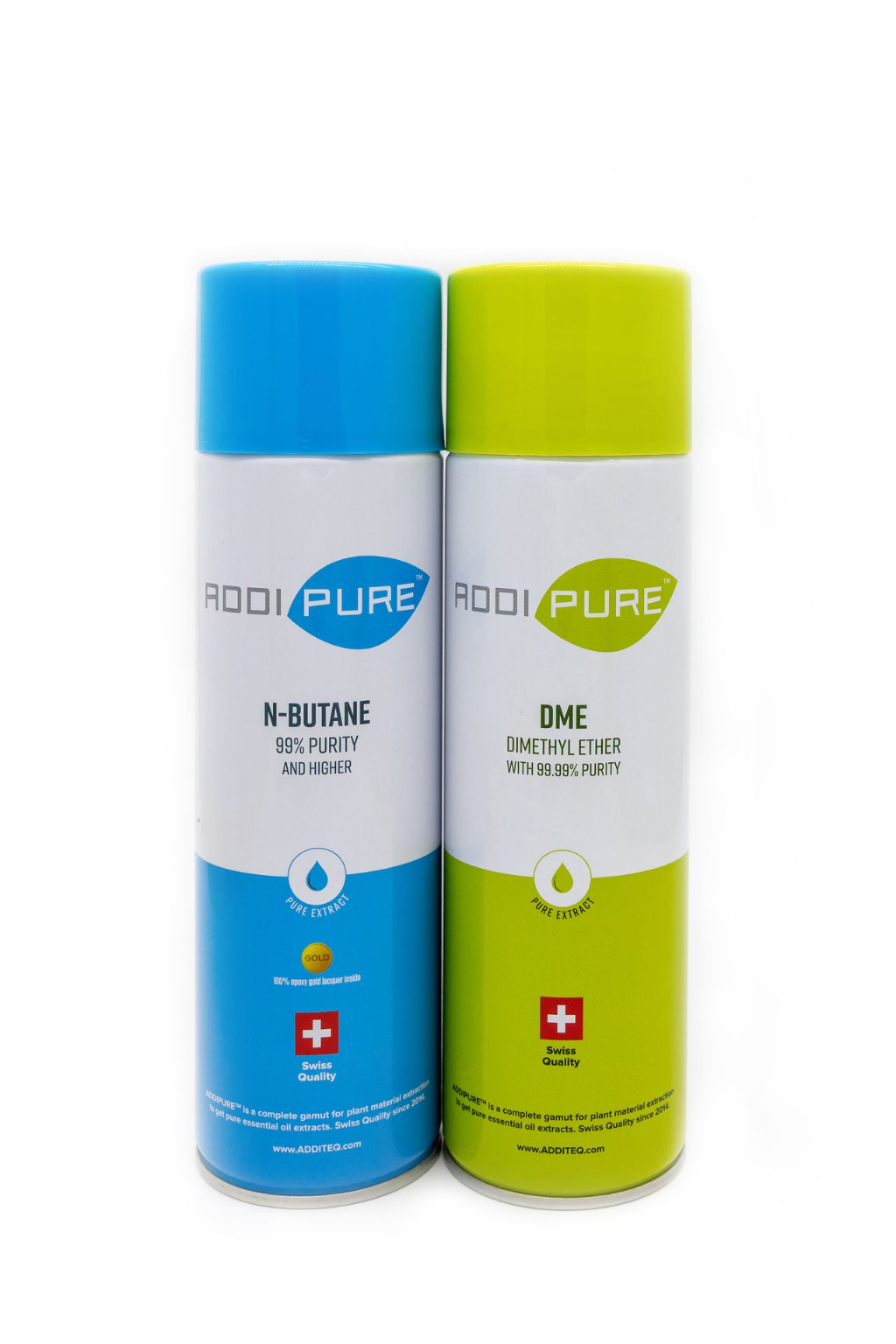
Besides solvent type, several other factors play a role in extraction. The quality and preparation of plant materials are important. Different plant parts (flowers, leaves, stems, roots) may contain different spectra of compounds. The composition of compounds can also be affected by drying or other processing. Particle size, temperature, extraction time, and pressure are also crucial.
In botanical plant extraction, it is extremely important to use food-grade solvents. Industrial solvents (for example fire lighter) contain toxic impurities such as methyl mercaptan, benzene, and other carcinogenic substances. For example, ADDIPURE's dimethyl ether (DME) and n-butane are food-safe, ultra-pure (purity is regularly analysed by an independent Swiss laboratory) and odourless. Both solvents are made in the European Union using environmentally friendly production techniques.
You might be interested in: BHO and DHO Extractions
Which substances are extracted from plants
Various extraction methods have historically led to scientific discoveries, as many plants contain biologically active compounds. Some have medicinal properties, while others are used in cosmetics or food. For example, lavender essential oil contains a high amount of linalool, a terpene with calming effects, which is also used in cleaning products.
- Terpenes and Terpenoids: Aromatic compounds found in essential plant oils that give plants their aroma and taste. They are mostly non-polar and are extracted in oils or non-polar solvents.
- Alkaloids: Highly biologically active compounds with pharmacological effects. Their solubility varies depending on the specific alkaloid.
- Cannabinoids: Natural cannabinoids (CBD, THC, CBG) are soluble in both polar and non-polar solvents.
- Oils, Waxes, and Other Lipophilic Compounds: Lipophilic components used in cosmetics and food, primarily extracted with non-polar solvents.
- Flavonoids and Phenolic Compounds: Polar compounds with antioxidant properties, mainly soluble in water or ethanol.
- Sugars and Organic Acids: Mostly polar compounds obtained during decoctions or macerations (soaking).
Want to dive deeper into the world of botanical extraction? Find more useful information, guides, and stunning photos on pureTalk.

 and then Add to Home Screen.