Extraction using organic solvents is the most effective way to obtain plant essential oils containing valuable compounds such as cannabinoids, terpenes, and many other plant essential oils. The most used extraction agent is compressed n-butane, which can be effectively used in both home and industrial extractors.
The chemical formula of n-butane is CH₃–CH₂–CH₂–CH₃, and under normal conditions it is a colorless gas that can easily be liquefied under mild pressure. In its liquid state, n-Butane acts as an effective organic non-polar solvent which, thanks to its unique properties, enables gentle and simple plant extraction, even for home cultivation.
How Butane Is Used for Extraction
Butane extraction works on a simple principle: the plant material is first placed into a sealed cylindrical extractor, which is then filled with compressed liquid gas. As the solvent flows through the plant material, it dissolves and carries essential oils, cannabinoids, terpenes, and other target compounds. Thanks to its low boiling point, the liquid butane then evaporates easily, leaving behind a pure plant concentrate.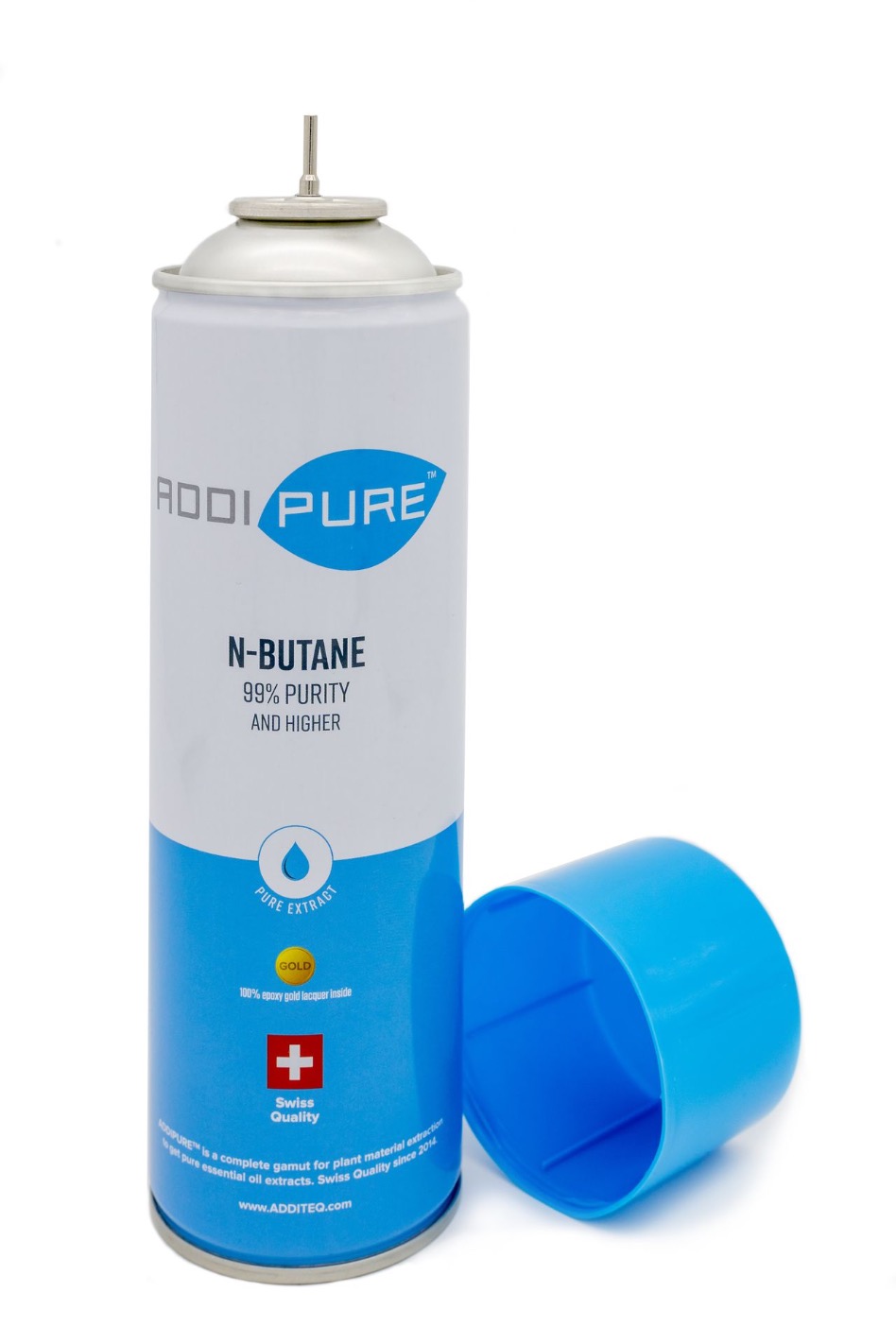
For more information on plant extraction consider this article: Everything You Need to Know About Plant Extraction
Safe home extraction with butane, dimethyl ether, and other compressed gases require proper equipment. The foundation is the ADDIPURE manual extractor made from food-grade anodized aluminum, which withstands both pressure and exposure to organic solvents. It is essential to use only food-grade gas for extraction, such as ADDIPURE n-Butane. Technical gases or butane intended for lighters contain harmful impurities such as mercaptans and benzene, which remain in the extract after extraction and pose serious health risks.
If interested in buying an extractor visit this link: A Guide to Buying Your First ADDIPURE Extractor (available soon)
Butane is neurotoxic, which is why it is necessary to completely remove the extraction agent from the extract. This requires the use of a vacuum pump, where the extract is further purified after the initial evaporation of the butane (known as purging). If you do not have access to a vacuum pump, it is better to use ADDIPURE DME (dimethyl ether) instead of butane for extraction, as it presents a lower health risk and is easier to evaporate from the extract.
You may also be interested in: What Is DME (Dimethyl Ether)
Butane and its vapors are highly flammable, and extraction must only be carried out outdoors while following all safety precautions. When working with extraction gases, do not handle fire or hot objects, do not smoke, and be aware of static discharge. A detailed guide to safe extraction with ADDIPURE, along with answers to frequently asked questions, can be found here.
| ADDIPURE Solvent | Butane (n-Butane) | Dimethyl ether (DME) |
| Polarity | Non polar | Partially polar |
| Extraction potential | Terpenes, terpenoids, cannabinoids, oils, waxes, other lipophilic compounds, some slightly non polar alkaloids | Broader terpene spectrum, terpenoids, cannabinoids, oils, waxes, other lipophilic compounds, improved yield of certain alkaloids, selected flavonoids, polyphenols, chlorophylls, carotenoids |
| Type of extract | BHO extract | Full spectrum DHO extract |
| Boiling point | -1 °C | -24,8 °C |
| Solvent resistance of Extractor | Yes, resistance to Butane | Yes, resistance to DME |
What Compounds Can Be Extracted from Plants Using n-Butane
Plant extracts obtained with butane are collectively referred to as BHO (Butane Hash Oil), a name that originates from the use of this technique for cannabis extraction. However, this is far from the only plant species from which useful compounds can be extracted using n-butane. With ADDIPURE extractors, it is possible to obtain essential oils from herbs and aromatic plants, many of which contain beneficial compounds used in home remedies, aromatherapy, and inhalation.
- Rosemary (Rosmarinus officinalis) – rich in terpenes such as cineole, phenolic diterpenes, and antioxidants, used in food, cosmetics, and pharmaceutical products.
- Lavender (Lavandula angustifolia) – produces an essential oil rich in linalool and linalyl acetate with proven antimicrobial and antioxidant effects. It is widely used in aromatherapy, cosmetics, and in the preparing of calming and relaxing products at home.
- Thyme (Thymus vulgaris) – contains thymol, carvacrol, and other phenolic compounds with antimicrobial and antioxidant effects.
- Oregano (Origanum vulgare) – very high essential oil content, rich in carvacrol and thymol, strong antioxidant and antimicrobial properties.
- Basil (Ocimum basilicum) – contains linalool, eucalyptol, estragole, and other volatile terpenes, used in food, cosmetics, and pharmaceuticals.
- Peppermint (Mentha piperita) – rich in essential oils, menthol, and other monoterpenes.
- Sage, savory, oregano, marjoram – plants from the Lamiaceae family are rich in lipophilic terpenes and phenols.
- Hops (Humulus lupulus) – contains resins, alpha and beta acids, xanthohumol, and terpenes.
- Ginger (Zingiber officinale) – rich in 6 gingerol, 6 shogaol, and volatile terpenes, suitable for obtaining pungent oils.
- Turmeric (Curcuma longa) – contains curcuminoids and aromatic sesquiterpenes, used in food and dietary supplements.
- Cardamom (Elettaria cardamomum) – contains aromatic compounds, including terpenes such as 1,8 cineole and alpha terpinyl acetate.
- Clove (Syzygium aromaticum) – very high eugenol content, a characteristic oily spice.
A more in-depth guide on: Which Plants Can Be Extracted with ADDIPURE (available soon)
 Organic solvents are divided into polar and non-polar. Butane is a strongly non-polar solvent that primarily binds to non-polar substances, especially terpenes, cannabinoids, certain alkaloids, fats, waxes, and other lipophilic (fat-soluble) compounds. On the other hand, polar compounds such as chlorophyll, sugars, or polyphenols are either not extracted by butane at all or only in very limited amounts.
You may also be interested in: What Is the Difference Between Polar and Non-Polar Solvents
This strong selectivity is one of the greatest advantages of n-butane. Because non-polar butane captures almost no pigment compounds such as chlorophyll and carotenoids, BHO extracts tend to be very pure. Depending on the extraction conditions and subsequent processing, BHO extracts can take many forms, ranging from liquid oil and wax-like textures to crystalline structures.
You may also be interested in: Different Types of BHO and DHO Extracts
Would you like to dive deeper into the world of plant extraction or improve your technique, so your extracts turn out perfect? Practical guides and tips for both extraction enthusiasts and complete beginners can be found on ADDIPURE pureTalk.

 and then Add to Home Screen.